
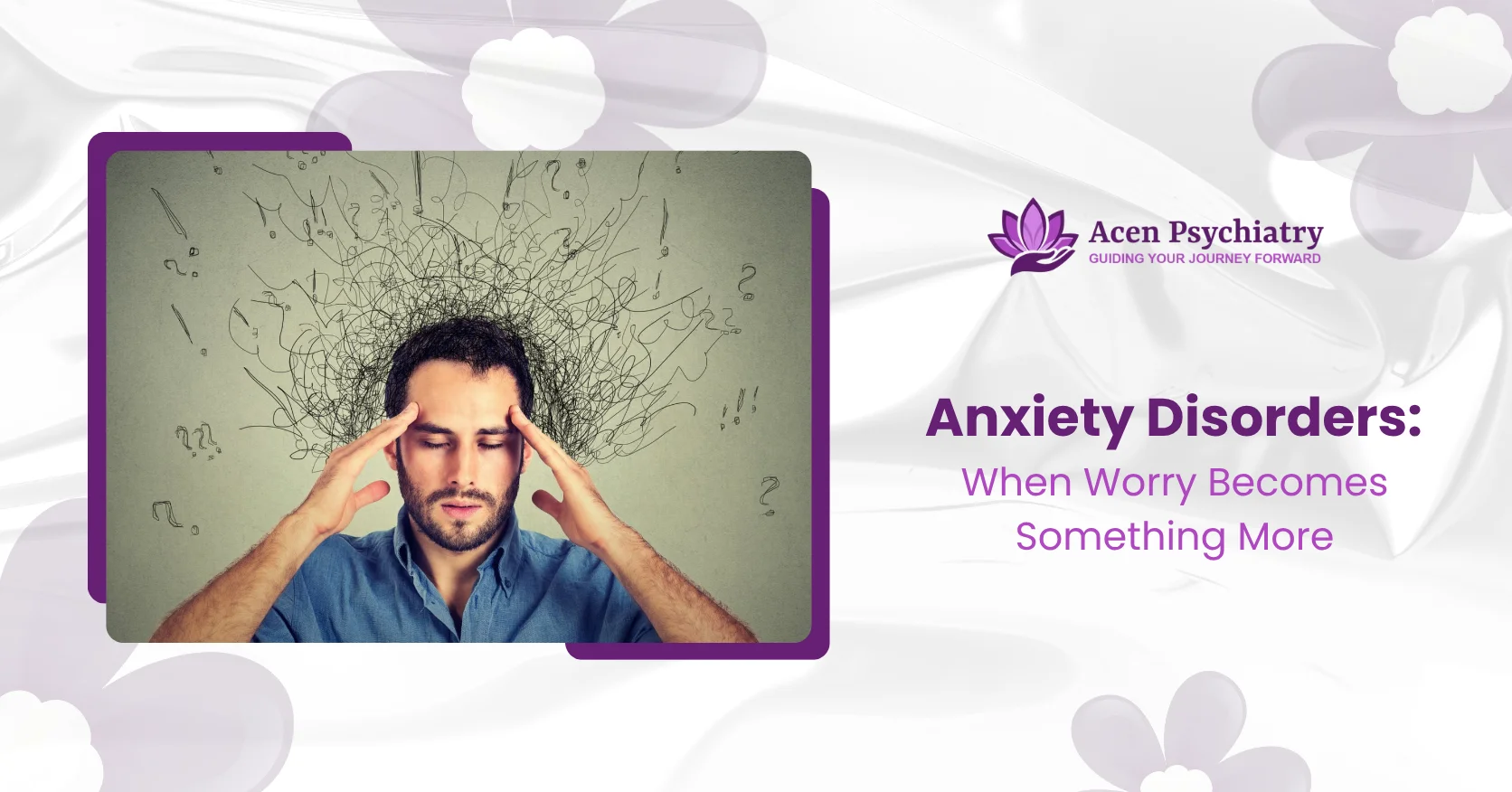
Everyone feels anxious sometimes — before a big presentation, during a health scare, in the lead-up to a major life change. That kind of anxiety is normal, often even useful.
Anxiety disorders are different: the worry doesn’t match the situation, doesn’t go away when the situation resolves, and starts running the show in ways that interfere with daily life.
Here’s how to tell the difference, and what to do if it sounds familiar.
What Anxiety Disorders Actually Look Like
Anxiety isn’t one single condition — it’s a category that includes several distinct disorders, each with its own pattern:
Generalized Anxiety Disorder (GAD)
Involves persistent, excessive worry about a wide range of things — work, health, relationships, finances — that’s difficult to control and present more days than not for at least six months.
Panic Disorder
Involves recurrent, unexpected panic attacks: sudden surges of intense fear accompanied by physical symptoms like a racing heart, chest tightness, shortness of breath, dizziness, or a feeling of impending doom, often followed by ongoing fear of having another attack.
Social Anxiety Disorder
Involves intense fear of social or performance situations, driven by worry about being judged, embarrassed, or scrutinized by others, often leading to significant avoidance.
Specific Phobias
Involve intense, irrational fear of a particular object or situation — flying, heights, needles, certain animals — disproportionate to any real danger.
Across all of these, common physical and cognitive symptoms include:
- Racing thoughts or a mind that won’t settle
- Muscle tension, headaches, or unexplained physical aches
- Restlessness or feeling “on edge”
- Difficulty concentrating, or your mind going blank
- Sleep problems — trouble falling asleep, staying asleep, or restless sleep
- Irritability
- Avoidance of situations, places, or activities that trigger anxiety
- Physical symptoms like a racing heart, sweating, nausea, or trembling
The Key Difference: Function, Not Just Feeling
The line between normal worry and an anxiety disorder isn’t about how intense the feeling is in a single moment — it’s about pattern and impact.
Ask yourself:
- Is the worry disproportionate to the actual situation?
- Is it persistent, most days, for weeks or months, rather than tied to one specific stressor that will resolve?
- Is it interfering with work, relationships, sleep, or daily functioning?
- Are you avoiding things you’d otherwise want or need to do because of anxiety?
If the answer to most of these is yes, it’s worth a real evaluation rather than waiting for it to pass on its own.
Why Anxiety Often Goes Untreated
Anxiety disorders are among the most common mental health conditions, yet many people live with them for years before seeking help.
A few reasons this happens:
It can look like just being a “worrier” or “high-strung.”
Long-standing anxiety can feel like a personality trait rather than a treatable condition, especially if it’s been present since childhood or adolescence.
Physical symptoms get chased separately.
Racing heart, stomach issues, headaches, and fatigue often send people to urgent care or a primary care provider first, sometimes for years, before anxiety is identified as the underlying cause.
Avoidance quietly shrinks a person’s life.
Because avoiding anxiety-provoking situations brings short-term relief, it’s easy to keep narrowing what you do, where you go, and what you take on, without fully registering how much smaller life has become as a result.
Getting an Accurate Picture
A proper anxiety evaluation involves a clinical conversation about your symptoms, how long they’ve been present, what triggers them, and how they’re affecting your daily life.
Because anxiety frequently overlaps with depression, ADHD, and certain physical health conditions (like thyroid disorders), a thorough evaluation also looks at what else might be contributing to or complicating the picture.
Anxiety disorders are highly treatable. Most people who get an accurate diagnosis and a treatment plan that fits their specific symptoms see real, meaningful improvement.
Acen Integrative Psychiatric Services provides comprehensive anxiety evaluation and treatment for patients ages 6 to 64, via telehealth across California, Oregon, and Illinois, with in-person visits available by request.
Ready to get some clarity? Book an appointment or contact us with any questions.
This article is for educational purposes and is not a substitute for a clinical evaluation. If you’re struggling with anxiety and it’s affecting your daily life, please consider speaking with a licensed provider.