
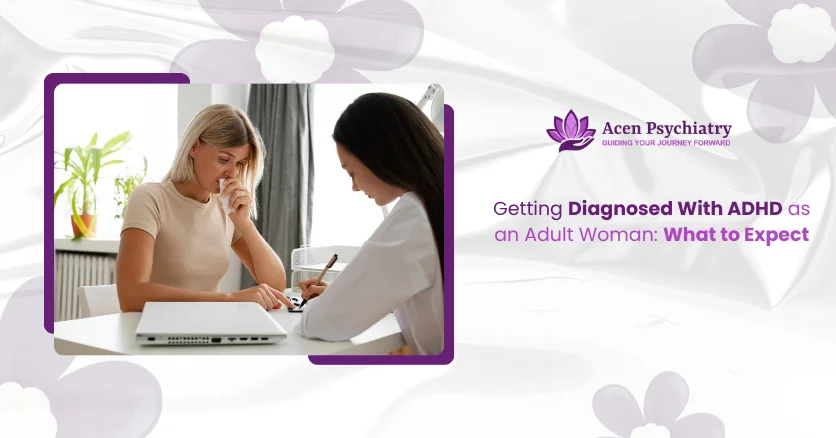
If you’re considering an ADHD evaluation as an adult woman, there’s a good chance you’re carrying some skepticism
into it — maybe from a past experience of being dismissed, told you were “just anxious,” or simply doubting whether
your struggles are “ADHD enough” to count. That skepticism is understandable, and it’s also worth setting aside long
enough to get an evaluation from a provider who actually knows what to look for. Here’s what the process realistically involves.
Why Your Evaluation Should Look Different Than You Expect
Many standard ADHD assessments were built around the hyperactive, externally disruptive presentation more
commonly seen in boys, which means a generic evaluation can genuinely miss ADHD in women whose symptoms look
different. A thorough evaluation for adult women should specifically account for:
- The inattentive presentation, rather than focusing primarily on hyperactivity
- A developmental history that considers how symptoms may have been masked, missed, or misattributed throughout
childhood and adolescence - The possibility of co-occurring anxiety or depression that developed as a consequence of years of undiagnosed
ADHD, rather than assuming those are the only things going on - Hormonal patterns and how symptoms may have fluctuated across your cycle, pregnancy, or other transitions
- The toll of masking — chronic exhaustion, perfectionism, and self-criticism that often accompany years of
compensating
If a provider’s questions only focus on classic hyperactive symptoms, that’s a sign the evaluation may not be capturing
your actual presentation.
What the Evaluation Process Involves
A detailed developmental history. Since ADHD symptoms are required to have been present since childhood, your
provider will ask about your school years, even if no one suspected ADHD at the time. Report cards described as “bright
but disorganized,” “talks a lot,” or “could do better if she tried” are common retrospective clues, even decades later.
Current symptom assessment. A conversation about how things look now — at work, at home, in relationships —
including the specific ways you’ve adapted or compensated, since masking can make standard symptom checklists
underrepresent the real impact.
Standardized rating scales. Self-report questionnaires that capture your day-to-day experience, often including
versions specifically designed to better capture the inattentive and internalized symptoms more common in women.
Objective testing. Computerized testing tools like QbTest or QbCheck provide measurable, objective data on attention
and impulsivity, adding a layer of evidence beyond self-report alone — which can be especially validating if you’ve
previously doubted whether your experience was “real.”
Ruling out overlapping conditions. Anxiety, depression, thyroid conditions, sleep disorders, and hormonal factors
can all mimic or compound ADHD symptoms, so a thorough evaluation considers the full picture rather than assuming
the most obvious explanation.
If You’ve Been Dismissed Before
If a previous provider told you that you couldn’t have ADHD because you did well in school, weren’t disruptive, or
seemed “too put together,” that assessment was very likely incomplete. High academic or professional achievement
doesn’t rule out ADHD — many women succeed by working far harder than necessary to mask underlying struggles,
often at a real personal cost that isn’t visible from the outside. A thorough evaluation should take your full lived
experience seriously, not just whether your symptoms match an outdated stereotype.
What Happens After Diagnosis
If you’re diagnosed with ADHD, treatment is built around your specific presentation and life circumstances, which
might include:
- Medication management, with attention to how your symptoms may fluctuate with hormonal changes over time
- Behavioral and organizational strategies tailored to how ADHD actually shows up for you, not generic productivity
advice - Addressing any co-occurring anxiety or depression as part of a complete plan
- Ongoing follow-up that adjusts as your life circumstances and hormonal stages change
Giving Yourself Permission to Find Out
You don’t need to justify why you’re seeking an evaluation, and you don’t need to have struggled in a particular visible
way to deserve one. If you’ve spent years wondering why ordinary life feels so much harder than it seems to for people
around you, that’s reason enough to get a real, thorough answer.
Acen Integrative Psychiatric Services provides comprehensive ADHD evaluations for adult women, with particular
attention to the inattentive presentation, masking, and hormonal factors that are often missed elsewhere. We see
patients via telehealth across California, Oregon, and Illinois, with in-person visits available by request.
Ready to get an evaluation that actually sees the full picture? Book an appointment or contact us with any
questions.
This article is for educational purposes and is not a substitute for a clinical evaluation. If you’re concerned about ADHD, please consult a licensed provider