
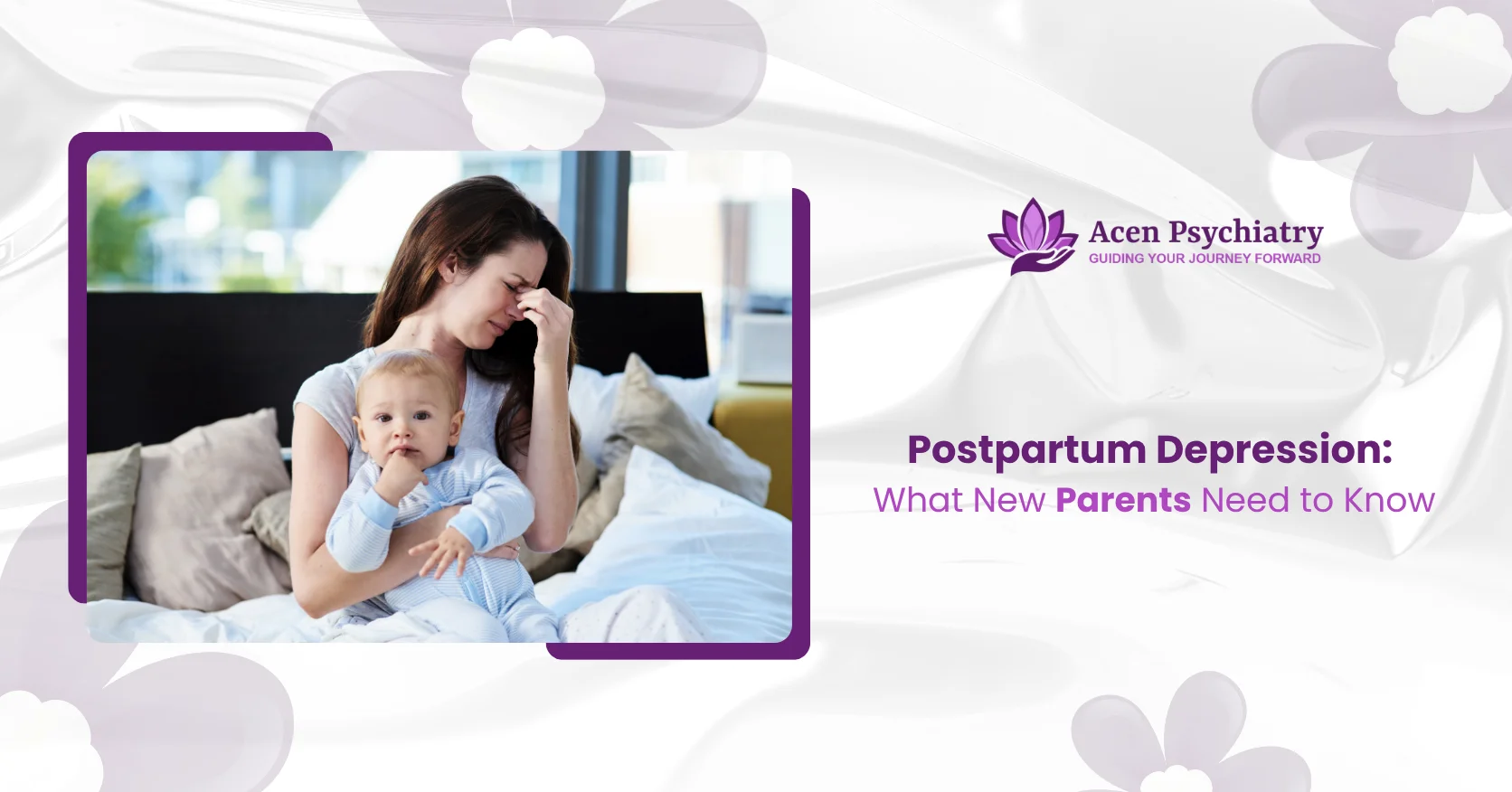
Bringing a new baby home is supposed to feel joyful — and for many parents, it also feels exhausting, disorienting, and harder than anyone warned them it would be. Somewhere in that mix, it can be genuinely difficult to tell the difference between normal new-parent adjustment and something that needs real support. Postpartum depression is common, treatable, and nothing to feel ashamed of, but it’s also frequently missed, both by new parents themselves and by the people around them.
The “Baby Blues” vs. Postpartum Depression
Up to 80% of new mothers experience the “baby blues” — mood swings, tearfulness, anxiety, and difficulty sleeping in the days after birth, driven largely by rapid hormonal shifts. This typically peaks within the first week and resolves on its own within about two weeks, without needing treatment. Postpartum depression is different. It tends to last longer than two weeks, feels more severe, and significantly interferes with your ability to function or care for yourself and your baby. If symptoms persist beyond two weeks, or feel intense from the start, it’s time to take it seriously rather than wait it out.
Signs of Postpartum Depression
Postpartum depression can show up anytime in the first year after birth, not just in the immediate newborn period. Signs include:
- Persistent sadness, emptiness, or hopelessness
- Severe mood swings or overwhelming irritability and anger
- Difficulty bonding with your baby, or feeling disconnected from them
- Withdrawing from your partner, family, or friends
- Changes in appetite, eating much more or much less than usual
- Inability to sleep even when the baby is sleeping, or sleeping far more than usual
- Overwhelming fatigue or loss of energy
- Intense anxiety, panic attacks, or racing, intrusive worries
- Feelings of worthlessness, guilt, or being a “bad parent”
- Difficulty concentrating or making decisions
- Thoughts of harming yourself or, in rare cases, your baby
That last point deserves direct acknowledgment: intrusive, unwanted thoughts about harm — even ones that feel shocking or frightening — are a known symptom of postpartum depression and anxiety, and having them does not mean you are dangerous or a bad parent. They are a sign that you need and deserve support, not a reason to stay silent out of fear or shame.
If You Are in Crisis
If you are having thoughts of harming yourself or your baby, please reach out for help immediately:
- Call or text 988 (the Suicide & Crisis Lifeline)
- Call the Postpartum Support International HelpLine at 1-800-944-4773
- Go to your nearest emergency room
It’s Not Just Mothers
Postpartum depression isn’t limited to birthing parents. Partners — including non-birthing parents and adoptive parents — can also experience postpartum depression, often driven by sleep deprivation, identity shifts, relationship strain, and the pressure of supporting a struggling partner while adjusting themselves. It’s underdiagnosed in this group largely because no one is looking for it.
Why It Happens
Postpartum depression isn’t caused by anything a parent did wrong. Contributing factors include the dramatic hormonal shifts after childbirth, sleep deprivation, a personal or family history of depression or anxiety, a difficult pregnancy or birth experience, lack of support, and the simple enormity of the life change itself. It can happen to anyone, regardless of how much a parent wanted or planned for their baby.
Getting Help
Postpartum depression is one of the most treatable forms of depression, and getting help early tends to lead to faster improvement — for you and for your baby’s development and your relationship together. Treatment options include therapy, support groups, medication (including options compatible with breastfeeding, when relevant), and practical support to help rebalance the load of early parenthood. If you’re a partner, friend, or family member reading this because you’re worried about someone else: trust your instincts. Many people with postpartum depression don’t recognize it themselves, or feel too ashamed to bring it up. Gently raising what you’ve noticed, without judgment, can be the push someone needs to get evaluated.
Acen Integrative Psychiatric Services provides postpartum depression evaluation and treatment via telehealth across California, Oregon, and Illinois, with in-person visits available by request. You don’t have to white-knuckle through this. Book an appointment or contact us — support is available, and reaching out is a sign of strength, not failure.
This article is for educational purposes and is not a substitute for a clinical evaluation. If you are having thoughts of harming yourself or your baby, please call or text 988, contact the Postpartum Support International HelpLine at 1-800-944-4773, or go to your nearest emergency room.