
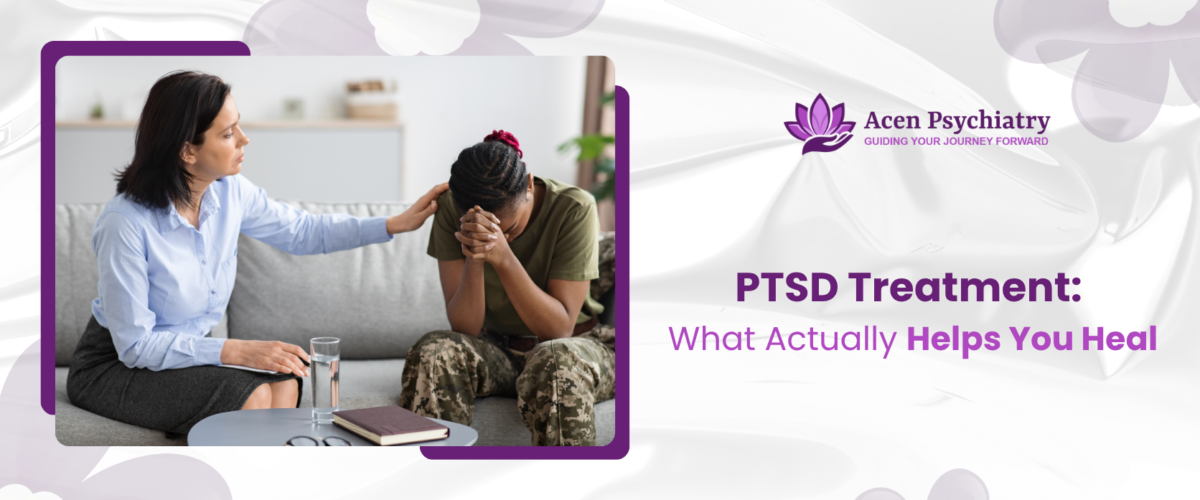
PTSD Treatment What Actually Helps You Heal (1)

PTSD Treatment: What Actually Helps You Heal

If you’ve recognized PTSD in yourself or started to understand what you’ve been experiencing, the next question is what treatment actually looks like. PTSD is one of the more researched conditions in mental health, and the evidence behind certain treatments is strong. Here’s an honest look at what tends to help.

Trauma-Focused Therapy

Unlike general talk therapy, trauma-focused therapies are specifically structured to help process traumatic memories rather than just discuss them. The strongest evidence-based options include:

  • Cognitive Processing Therapy (CPT) helps identify and shift unhelpful beliefs that developed because of the trauma — things like excessive self-blame, beliefs about safety, or trust — through structured cognitive work.
  • Prolonged Exposure (PE) Therapy involves gradually and safely approaching trauma-related memories and situations that have been avoided, which over time reduces their power to trigger distress. This is one of the most extensively researched PTSD treatments.
  • Eye Movement Desensitization and Reprocessing (EMDR) uses guided eye movements while processing traumatic memories, based on the idea that this helps the brain reprocess “stuck” memories. EMDR has a strong evidence base, particularly for single-incident trauma.
  • Trauma-Focused CBT (TF-CBT) is specifically designed for children and adolescents, combining trauma processing with skills for managing emotions and involving caregivers in the treatment process.

These therapies typically require a structured course of sessions — often 8 to 16, depending on the approach — rather than open-ended, indefinite talk therapy. They can feel difficult, particularly in the early sessions, but that difficulty is part of the process of reducing the trauma’s grip over time, not a sign that something is going wrong.

Medication

Medication doesn’t “cure” PTSD, but it can meaningfully reduce symptoms and make it more possible to engage in therapy.

  • SSRIs and SNRIs are the primary medication options with evidence for PTSD, and they can help with the depression, anxiety, and hyperarousal symptoms that often accompany it.
  • Prazosin is sometimes used specifically for PTSD-related nightmares, targeting that symptom more directly than general antidepressants do.

Medication is often most helpful as a complement to trauma-focused therapy rather than a replacement for it — symptom relief from medication can make someone more able to engage with and benefit from therapy, rather than being too overwhelmed to do the deeper work.

Why Trauma-Focused Treatment Matters Specifically

General supportive therapy — just talking about how you’re feeling — can be valuable for overall wellbeing, but it isn’t the same as trauma-focused treatment, and it isn’t enough on its own to resolve PTSD for most people. The structured, evidence-based therapies listed above are specifically designed to help the brain process traumatic memories differently, not just talk around them. If you’ve been in therapy for PTSD without much improvement, it may be worth asking whether the approach being used is one of the trauma-specific modalities above.

What to Expect From the Process

Healing from trauma isn’t linear. Some honest things to know going in:

  • It’s common to feel worse before feeling better in the early stages of trauma-focused therapy, as you begin engaging with memories you’ve been avoiding.
  • Progress isn’t always steady — setbacks, particularly around anniversaries or reminders, don’t mean treatment isn’t working.
  • You’re in control of the pace. Good trauma treatment never forces you faster than you’re ready to go, and a skilled provider will check in regularly about pacing.
  • Improvement is measurable, not just a feeling. Reduced flashback frequency, better sleep, less avoidance, and an easier time engaging with daily life are real, trackable signs of progress.

You Don’t Have to Carry This Alone

If you’ve been managing PTSD symptoms on your own — through avoidance, overwork, or simply white-knuckling through daily life — know that real, structured treatment exists and works. You don’t have to keep organizing your life around what happened.

Acen Integrative Psychiatric Services offers PTSD treatment, including medication management and coordination with trauma-focused therapy, for patients ages 6 to 64 across California, Oregon, and Illinois via telehealth, with in-person visits available by request.

Ready to explore what could help? Book an appointment or contact us — we’re glad to talk through your options.

This article is for educational purposes and is not a substitute for a clinical evaluation. If you are in crisis or having thoughts of suicide, please call or text 988, or go to your nearest emergency room.
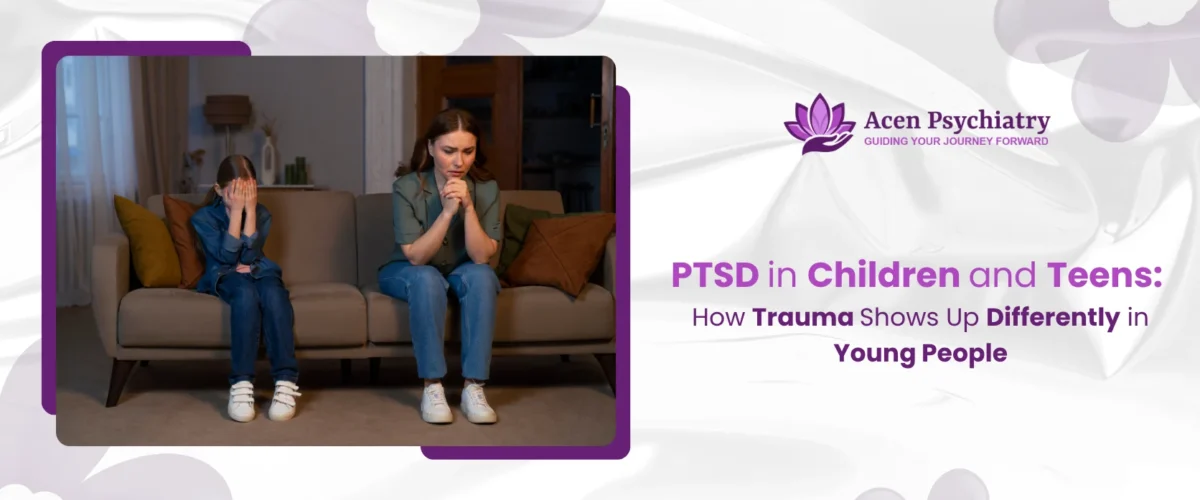
PTSD in Children and Teens How Trauma Shows Up Differently in Young People (1)

PTSD in Children and Teens: How Trauma Shows Up Differently in Young People

When we picture PTSD, we tend to picture adults. But children and teens can develop PTSD too, after experiences like accidents, abuse, neglect, witnessing violence, a frightening medical event, or the sudden loss of a parent or caregiver. The challenge for parents is that PTSD in young people often doesn’t look like the textbook adult version — which means it can go unrecognized for a long time, sometimes mistaken for behavioral problems, anxiety, or simply “acting out.”

How Trauma Symptoms Differ by Age

Young children (under 6) often can’t verbalize what they’re experiencing. Trauma may show up as:

  • Regression in skills they’d already mastered (potty training, language)
  • Clinginess and separation anxiety beyond what’s typical for their age
  • Re-enacting the traumatic event through play, sometimes repetitively
  • New or worsened nightmares, not necessarily about the event directly
  • Physical symptoms like stomachaches with no medical explanation

School-age children may show:

  • A drop in school performance or difficulty concentrating
  • Increased irritability, anger outbursts, or aggressive behavior
  • Avoidance of specific people, places, or situations connected to the trauma
  • Trouble sleeping, nightmares, or new fears that weren’t present before
  • Physical complaints (headaches, stomachaches) without clear medical cause
  • Guilt or self-blame about the traumatic event, even when it wasn’t their fault

Teenagers often present closer to the adult pattern, but with some distinct features:

  • Risk-taking behavior, including substance use, that wasn’t present before
  • Withdrawal from friends and previously enjoyed activities
  • Irritability, anger, or a noticeable shift in personality
  • Difficulty trusting others or significant relationship changes
  • Self-destructive behavior in some cases
  • Avoidance of reminders, sometimes including refusing to discuss the event at all

Why Trauma in Kids Gets Misread

A child or teen showing trauma symptoms is frequently labeled as having a behavior problem, ADHD, or “just being difficult,” especially when the trauma itself isn’t known or disclosed. A few reasons this happens:

  • Kids may not disclose what happened, especially if the trauma involved someone they depend on, if they feel shame or responsibility, or if they don’t have the words to describe it.
  • Acting out can look like the problem itself, rather than a symptom of something underneath. A child having angry outbursts may be treated for “behavior issues” without anyone asking what might be driving that anger.
  • Adults sometimes assume kids are resilient and will “bounce back,” which can lead to underestimating how seriously an event affected a child, particularly when the child seemed okay immediately afterward.

What Parents Can Do

If you know your child experienced a frightening or traumatic event, watch for symptoms that persist beyond a few weeks, especially if they’re intensifying rather than improving. Some things that can help in the meantime:

  • Maintain normal routines as much as possible — predictability is stabilizing for kids after trauma
  • Let your child guide how much they want to talk about what happened, without forcing it
  • Avoid minimizing (“it wasn’t that bad”) or over-dramatizing the event in front of them
  • Watch your own reactions — kids take cues from how calm or distressed the adults around them are
  • Seek professional support sooner rather than later if symptoms aren’t improving

What an Evaluation Involves

A thorough evaluation for childhood or adolescent PTSD includes a conversation with parents about the child’s history and observed symptoms, age-appropriate engagement with the child or teen directly, and often input from teachers or other caregivers. Because trauma symptoms overlap significantly with ADHD, anxiety, and depression, a careful evaluation considers the full picture rather than assuming the most obvious label.

Treatment Works, and Earlier Is Better

Trauma-focused therapies designed specifically for children and teens — including Trauma-Focused CBT — have strong evidence for helping young people process traumatic experiences and reduce symptoms. The earlier trauma is addressed, the better the outcomes tend to be, but it’s never too late to get help, even years after the event.

Acen Integrative Psychiatric Services provides PTSD and trauma-related evaluation and treatment for children and adolescents via telehealth across California, Oregon, and Illinois, with in-person visits available by request.

Concerned about your child or teen? Book an appointment or contact us — we’re glad to help you figure out the next step.

This article is for educational purposes and is not a substitute for a clinical evaluation. If you have concerns about your child’s wellbeing or safety, please consult a licensed provider.

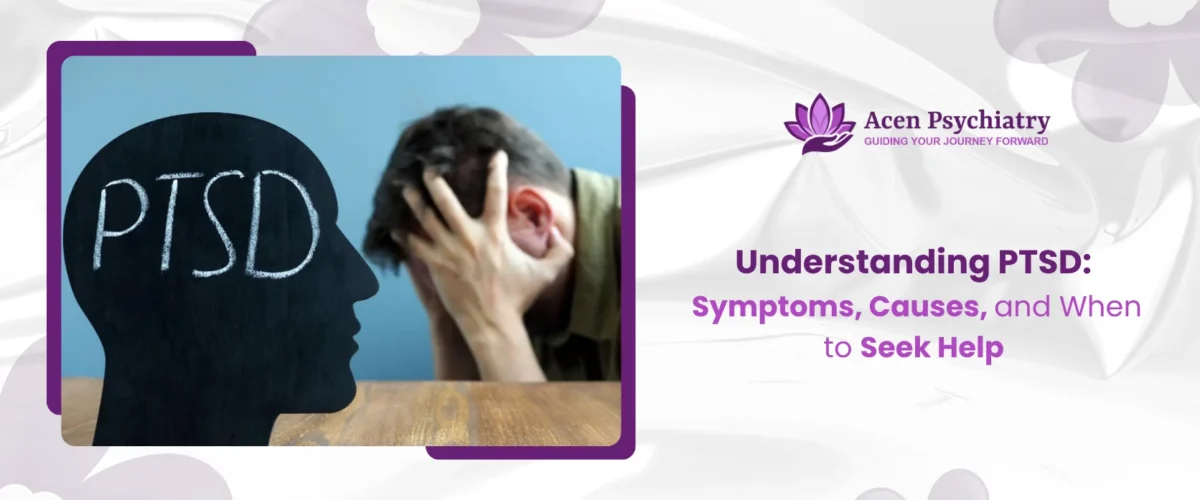
Copy of Understanding PTSD Symptoms, Causes, and When to Seek Help (1)

Understanding PTSD: Symptoms, Causes, and When to Seek Help

Most people associate PTSD with combat veterans, but post-traumatic stress disorder can develop after any event that overwhelms a person’s ability to cope — an accident, an assault, a medical crisis, the sudden loss of someone close, or witnessing violence. Not everyone who experiences trauma develops PTSD, and that’s not a reflection of strength or weakness. It’s about how the brain and body process an overwhelming experience, and for some people, that processing gets stuck.

What PTSD Actually Looks Like

PTSD symptoms generally fall into four categories, and a diagnosis typically requires symptoms from each one, persisting for more than a month and causing real disruption to daily life.
Intrusive memories. Unwanted, distressing memories of the traumatic event, flashbacks that feel like reliving it, nightmares, or intense distress when something reminds you of what happened.
Avoidance. Steering clear of places, people, conversations, or activities that bring back memories of the trauma — sometimes in obvious ways, sometimes through subtle daily choices that quietly shrink a person’s world.
Negative changes in thinking and mood. Persistent negative beliefs about yourself or the world (“I’m not safe anywhere,” “I can’t trust anyone”), emotional numbness, loss of interest in things you used to enjoy, difficulty feeling positive emotions, or memory gaps around the event itself.
Changes in arousal and reactivity. Being easily startled, feeling constantly on guard, irritability or angry outbursts, difficulty sleeping or concentrating, and a heightened startle response that wasn’t there before.

Trauma Doesn’t Have to Look a Certain Way

One of the most common misconceptions about PTSD is that it only follows dramatic, life-threatening events. In reality, PTSD can develop after:
Car accidents or other serious accidents
Physical or sexual assault
Childhood abuse or neglect
Witnessing violence, even if you weren’t directly harmed
A frightening medical diagnosis or traumatic medical procedure
The sudden or violent death of someone close to you
Natural disasters
Prolonged exposure to a dangerous or unstable environment
What determines whether trauma leads to PTSD isn’t just the event itself, but a combination of factors — how overwhelming the experience was, the support available afterward, prior history of trauma, and individual biological factors that are still being researched. None of this is something a person chooses or controls.

Why It’s Often Missed

PTSD frequently goes unrecognized, for a few reasons:
Symptoms can be mistaken for other conditions. Irritability, sleep problems, and difficulty concentrating overlap heavily with depression and anxiety, and a PTSD diagnosis can be missed if a provider doesn’t specifically ask about trauma history.
Delayed onset is real. Symptoms don’t always appear immediately after a traumatic event. Sometimes they emerge months or even years later, often triggered by a new stressor or reminder.
Avoidance makes it invisible. Because avoidance is a core symptom, many people with PTSD become very good at steering around anything that would reveal the problem — including conversations about the trauma itself.
Shame and self-blame keep people quiet. Especially after assault or abuse, many people carry unwarranted guilt that keeps them from seeking help, even though the trauma was never their fault.

When to Seek Help

If it’s been more than a month since a traumatic event and you’re still experiencing intrusive memories, avoidance, mood changes, or heightened reactivity that’s interfering with your daily life, it’s time to talk to a professional. You don’t need to have processed or “made sense of” what happened before seeking help — that’s part of what treatment is for.
If you are having thoughts of suicide or self-harm, please reach out immediately. Call or text 988 (the Suicide & Crisis Lifeline) any time, or go to your nearest emergency room.

Healing Is Possible

PTSD is treatable, and most people who receive appropriate treatment see meaningful improvement. You don’t have to keep living life around the trauma — there are evidence-based paths through it.
Acen Integrative Psychiatric Services provides PTSD evaluation and treatment for patients ages 6 to 64, via telehealth across California, Oregon, and Illinois, with in-person visits available by request.
Ready to take the first step? Book an appointment or contact us with any questions.
This article is for educational purposes and is not a substitute for a clinical evaluation. If you are in crisis or having thoughts of suicide, please call or text 988, or go to your nearest emergency room.